- Understand the basic operation of network device drivers and routing/bridging processes in order to implement network simulation models that are more independent of simulators. Specifically, the following will be investigated:
- How IRQs and their handlers are related with event handlers in discrete-event-driven simulators;
- How timers can be implemented in simulators such a way that details specific to simulators are hidden from the models.
- Start working on building new simulation models for hybrid TDM/WDM-PONs based on existing SUCCESS models and OMNeT++ 4.x release.
- Study the concurrent programming and languages better supporting this framework including Erlang, scalar, and clojure.
Monday, January 19, 2009
To-do for research this week
Tuesday, October 14, 2008
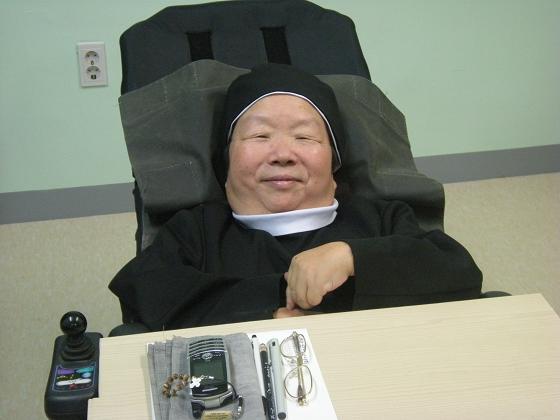
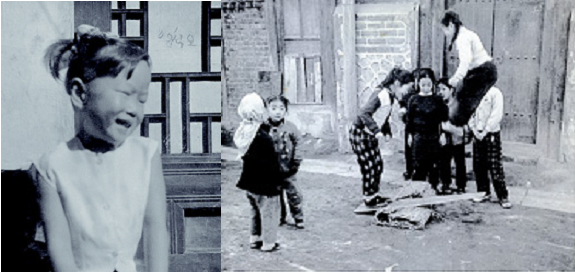
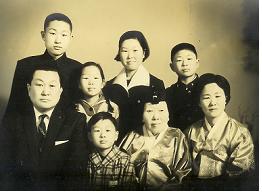
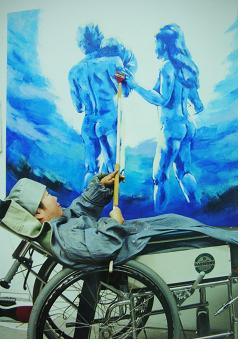
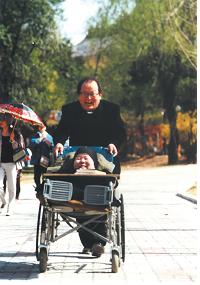
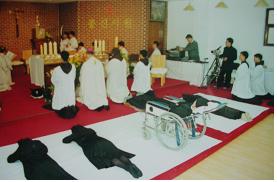
[한겨레 기사돌려보기]내가 세상에 태어난 진정한 이유
| ||||||||||||||||||||||||||||||||||||||||||||||||||||||||||||||||||||||||||||||||||||||||||||||||||||||||






 기사수정 :
 Monday, January 28, 2008
Caroline Kennedy's endorsement of Obama
Caroline put it correctly here in New York Times on who should be a next president and a leader of not only US but also the world:
January 27, 2008
Op-Ed Contributor
A President Like My Father
By CAROLINE KENNEDY
January 27, 2008
Op-Ed Contributor
A President Like My Father
By CAROLINE KENNEDY
OVER the years, I’ve been deeply moved by the people who’ve told me they wished they could feel inspired and hopeful about America the way people did when my father was president. This sense is even more profound today. That is why I am supporting a presidential candidate in the Democratic primaries, Barack Obama.
My reasons are patriotic, political and personal, and the three are intertwined. All my life, people have told me that my father changed their lives, that they got involved in public service or politics because he asked them to. And the generation he inspired has passed that spirit on to its children. I meet young people who were born long after John F. Kennedy was president, yet who ask me how to live out his ideals.
Sometimes it takes a while to recognize that someone has a special ability to get us to believe in ourselves, to tie that belief to our highest ideals and imagine that together we can do great things. In those rare moments, when such a person comes along, we need to put aside our plans and reach for what we know is possible.
We have that kind of opportunity with Senator Obama. It isn’t that the other candidates are not experienced or knowledgeable. But this year, that may not be enough. We need a change in the leadership of this country — just as we did in 1960.
Most of us would prefer to base our voting decision on policy differences. However, the candidates’ goals are similar. They have all laid out detailed plans on everything from strengthening our middle class to investing in early childhood education. So qualities of leadership, character and judgment play a larger role than usual.
Senator Obama has demonstrated these qualities throughout his more than two decades of public service, not just in the United States Senate but in Illinois, where he helped turn around struggling communities, taught constitutional law and was an elected state official for eight years. And Senator Obama is showing the same qualities today. He has built a movement that is changing the face of politics in this country, and he has demonstrated a special gift for inspiring young people — known for a willingness to volunteer, but an aversion to politics — to become engaged in the political process.
I have spent the past five years working in the New York City public schools and have three teenage children of my own. There is a generation coming of age that is hopeful, hard-working, innovative and imaginative. But too many of them are also hopeless, defeated and disengaged. As parents, we have a responsibility to help our children to believe in themselves and in their power to shape their future. Senator Obama is inspiring my children, my parents’ grandchildren, with that sense of possibility.
Senator Obama is running a dignified and honest campaign. He has spoken eloquently about the role of faith in his life, and opened a window into his character in two compelling books. And when it comes to judgment, Barack Obama made the right call on the most important issue of our time by opposing the war in Iraq from the beginning.
I want a president who understands that his responsibility is to articulate a vision and encourage others to achieve it; who holds himself, and those around him, to the highest ethical standards; who appeals to the hopes of those who still believe in the American Dream, and those around the world who still believe in the American ideal; and who can lift our spirits, and make us believe again that our country needs every one of us to get involved.
I have never had a president who inspired me the way people tell me that my father inspired them. But for the first time, I believe I have found the man who could be that president — not just for me, but for a new generation of Americans.
The reason to believe again
Here is the living example of the reason to believe again, which reminds me of much of Lincoln's great speeches.
Barack Obama's victory speech in South Carolina (from his campaign web site):
Text as prepared for delivery...
Over two weeks ago, we saw the people of Iowa proclaim that our time for change has come. But there were those who doubted this country’s desire for something new – who said Iowa was a fluke not to be repeated again.
Well, tonight, the cynics who believed that what began in the snows of Iowa was just an illusion were told a different story by the good people of South Carolina.
After four great contests in every corner of this country, we have the most votes, the most delegates, and the most diverse coalition of Americans we’ve seen in a long, long time.
They are young and old; rich and poor. They are black and white; Latino and Asian. They are Democrats from Des Moines and Independents from Concord; Republicans from rural Nevada and young people across this country who’ve never had a reason to participate until now. And in nine days, nearly half the nation will have the chance to join us in saying that we are tired of business-as-usual in Washington, we are hungry for change, and we are ready to believe again
But if there’s anything we’ve been reminded of since Iowa, it’s that the kind of change we seek will not come easy. Partly because we have fine candidates in the field – fierce competitors, worthy of respect. And as contentious as this campaign may get, we have to remember that this is a contest for the Democratic nomination, and that all of us share an abiding desire to end the disastrous policies of the current administration.
But there are real differences between the candidates. We are looking for more than just a change of party in the White House. We’re looking to fundamentally change the status quo in Washington – a status quo that extends beyond any particular party. And right now, that status quo is fighting back with everything it’s got; with the same old tactics that divide and distract us from solving the problems people face, whether those problems are health care they can’t afford or a mortgage they cannot pay.
So this will not be easy. Make no mistake about what we’re up against.
We are up against the belief that it’s ok for lobbyists to dominate our government – that they are just part of the system in Washington. But we know that the undue influence of lobbyists is part of the problem, and this election is our chance to say that we’re not going to let them stand in our way anymore.
We are up against the conventional thinking that says your ability to lead as President comes from longevity in Washington or proximity to the White House. But we know that real leadership is about candor, and judgment, and the ability to rally Americans from all walks of life around a common purpose – a higher purpose.
We are up against decades of bitter partisanship that cause politicians to demonize their opponents instead of coming together to make college affordable or energy cleaner; it’s the kind of partisanship where you’re not even allowed to say that a Republican had an idea – even if it’s one you never agreed with. That kind of politics is bad for our party, it’s bad for our country, and this is our chance to end it once and for all.
We are up against the idea that it’s acceptable to say anything and do anything to win an election. We know that this is exactly what’s wrong with our politics; this is why people don’t believe what their leaders say anymore; this is why they tune out. And this election is our chance to give the American people a reason to believe again.
And what we’ve seen in these last weeks is that we’re also up against forces that are not the fault of any one campaign, but feed the habits that prevent us from being who we want to be as a nation. It’s the politics that uses religion as a wedge, and patriotism as a bludgeon. A politics that tells us that we have to think, act, and even vote within the confines of the categories that supposedly define us. The assumption that young people are apathetic. The assumption that Republicans won’t cross over. The assumption that the wealthy care nothing for the poor, and that the poor don’t vote. The assumption that African-Americans can’t support the white candidate; whites can’t support the African-American candidate; blacks and Latinos can’t come together.
But we are here tonight to say that this is not the America we believe in. I did not travel around this state over the last year and see a white South Carolina or a black South Carolina. I saw South Carolina. I saw crumbling schools that are stealing the future of black children and white children. I saw shuttered mills and homes for sale that once belonged to Americans from all walks of life, and men and women of every color and creed who serve together, and fight together, and bleed together under the same proud flag. I saw what America is, and I believe in what this country can be.
That is the country I see. That is the country you see. But now it is up to us to help the entire nation embrace this vision. Because in the end, we are not just up against the ingrained and destructive habits of Washington, we are also struggling against our own doubts, our own fears, and our own cynicism. The change we seek has always required great struggle and sacrifice. And so this is a battle in our own hearts and minds about what kind of country we want and how hard we’re willing to work for it.
So let me remind you tonight that change will not be easy. That change will take time. There will be setbacks, and false starts, and sometimes we will make mistakes. But as hard as it may seem, we cannot lose hope. Because there are people all across this country who are counting us; who can’t afford another four years without health care or good schools or decent wages because our leaders couldn’t come together and get it done.
Theirs are the stories and voices we carry on from South Carolina.
The mother who can’t get Medicaid to cover all the needs of her sick child – she needs us to pass a health care plan that cuts costs and makes health care available and affordable for every single American.
The teacher who works another shift at Dunkin Donuts after school just to make ends meet – she needs us to reform our education system so that she gets better pay, and more support, and her students get the resources they need to achieve their dreams.
The Maytag worker who is now competing with his own teenager for a $7-an-hour job at Wal-Mart because the factory he gave his life to shut its doors – he needs us to stop giving tax breaks to companies that ship our jobs overseas and start putting them in the pockets of working Americans who deserve it. And struggling homeowners. And seniors who should retire with dignity and respect.
The woman who told me that she hasn’t been able to breathe since the day her nephew left for Iraq, or the soldier who doesn’t know his child because he’s on his third or fourth tour of duty – they need us to come together and put an end to a war that should’ve never been authorized and never been waged.
The choice in this election is not between regions or religions or genders. It’s not about rich versus poor; young versus old; and it is not about black versus white.
It’s about the past versus the future.
It’s about whether we settle for the same divisions and distractions and drama that passes for politics today, or whether we reach for a politics of common sense, and innovation – a shared sacrifice and shared prosperity.
There are those who will continue to tell us we cannot do this. That we cannot have what we long for. That we are peddling false hopes.
But here’s what I know. I know that when people say we can’t overcome all the big money and influence in Washington, I think of the elderly woman who sent me a contribution the other day – an envelope that had a money order for $3.01 along with a verse of scripture tucked inside. So don’t tell us change isn’t possible.
When I hear the cynical talk that blacks and whites and Latinos can’t join together and work together, I’m reminded of the Latino brothers and sisters I organized with, and stood with, and fought with side by side for jobs and justice on the streets of Chicago. So don’t tell us change can’t happen.
When I hear that we’ll never overcome the racial divide in our politics, I think about that Republican woman who used to work for Strom Thurmond, who’s now devoted to educating inner-city children and who went out onto the streets of South Carolina and knocked on doors for this campaign. Don’t tell me we can’t change.
Yes we can change.
Yes we can heal this nation.
Yes we can seize our future.
And as we leave this state with a new wind at our backs, and take this journey across the country we love with the message we’ve carried from the plains of Iowa to the hills of New Hampshire; from the Nevada desert to the South Carolina coast; the same message we had when we were up and when we were down – that out of many, we are one; that while we breathe, we hope; and where we are met with cynicism, and doubt, and those who tell us that we can’t, we will respond with that timeless creed that sums up the spirit of a people in three simple words:
Yes. We. Can.
Monday, November 26, 2007
Automatic Mount/Unmount Novell NetWare Shares in Linux
Purpose
Configurations
"$HOME/.bash_logout"
- Automatically mount Novell NetWare shares without prompting passwords when logging in.
- Automatically unmount Novell NetWare shares without prompting passwords when logging out.
Configurations
- "$HOME/.nwclient"
- Create the file with permissions of "0600".
- Add "Server/User Password" pair per each line as follows:
where "NW_UN1/2" could be either just a NetWare username orNW_Server1/NW_UN1 PW1
NW_Server2/NW_UN2 Password2
a NetWare username appended by its context (e.g.,
"joe.ee_dept.eng_school.great_univ"). - "$HOME/.bash_profile"
- Add "ncpmount" command as follows:
if [ ! -d /mount/point1/dir1_in_mounted_share ]; then
# Check the above to prevent duplicate mount.
ncpmount -S NW_Server1 -U NW_UN1 -u Linux_UN -V path/to/subdirectory1 -A NW_Server1_DNS_Name /mount/point1
fi
# We need "-m" below to allow multiple mounts from the same server.
if [ ! -d /mount/point2/dir2_in_mounted_share ]; then
ncpmount -S NW_Server2 -U NW_UN2 -u Linux_UN -V path/to/subdirectory2 -m -A NW_Server2_DNS_Name /mount/point2
fi
if [ ! -d /mount/point3/dir3_in_mounted_share ]; then
ncpmount -S NW_Server2 -U NW_UN2 -u Linux_UN -V path/to/subdirectory3 -m -A NW_Server2_DNS_Name /mount/point3
fi
- Add "ncpumount" command as follows:
 if [ `w | grep pts | grep Linux_UN | wc -l` -eq 1 ]; then
# The following will be executed only when this shell is the last login shell.

if [ -d /mount/point1/dir1_in_mounted_share ]; then
ncpumount /mount/point1
fi
if [ -d /mount/point2/dir2_in_mounted_share ]; then
ncpumount /mount/point2
fi
if [ -d /mount/point3/dir3_in_mounted_share ]; then
ncpumount /mount/point3
fi
fi
Tuesday, April 17, 2007
Linux Programming Environment Settings in Windows XP (with VMware)
- GNU Emacs color settings & syntax highlighting for 256-color terminals (with PuTTy and screen):
- See EmacsWiki: PuTTy for PuTTy settings.
- Just change "xterm-256color" to "putty-256color" in "terminal-type-string".
- Install "xterm-256color.el" under "lisp/term" directory.
- Create "putty-256color.el" having the following line in the same directory:
- (load "term/xterm-256color" nil t)
- Install (from source) 256-color-enabled "screen".
- Add "term putty-256color" in "$HOME/.screenrc".
- Static IP address with NAT for Ubuntu server in VMware:
- Update "interface" file under "/etc/networking" as follows:
- From:
iface eth0 inet dhcp - To:
iface eth0 inet static
address xxx.yyy.zzz.abc
gateway xxx.yyy.zzz.2
netmask 255.255.255.0
network xxx.yyy.zzz.0
broadcast xxx.yyy.zzz.255

Monday, July 31, 2006
Windows XP Tips
To turn off the beep:
- Open the Device Manager.
- Select View -> Show Hidden Devices, and disable "Beep" under "Non-Plug and Play Drivers".
Windows XP Backup and Restore Guidelines
Change of storage spaces
- Windows temporary directories and user profiles
- Change temporary directories to "D:\TEMp" through environment variable setting.
- Change %USERPROFILE% directory to "G:\kks" (see MS KB Q214470).
- Create a new environment variable: HOME="G:\kks\My Documents"
- MS Outlook
- Mozilla Firefox
When restoring, don't forget to move the backup copy of "profile.ini"
from the data drive to its original place so that it locates the
correct (i.e., modified) entry for the profile.
Thursday, July 28, 2005
Research Plan on Scheduling Algorithms for WDM-PON under SUCCESS-HPON Architecture
- To provide better fairness among all traffic flows both up- and downstream, we need more systematic approach in designing scheduling algorithms, hopefully based on some quantitative analysis like fairness bounds. For systematic approach and quantitative analysis, it's critical to extend the definition of fairness to multiple-server case.
- Deficit Round-Robin (DRR) fair queueing and its many variations could be good starting points in that they could naturally support variable size packets and rather simple to implement.
Wednesday, June 29, 2005
Barack Obama, Illinois's Senator, writes on Lincoln
The writing of a man is himself. In this regard, his short article on
The President Lincoln in the recent special issue of Time Magazine
reveals much of himself; I am interested in him, at least.
Politics and Politicians, especially nowadays, are definitely not my favorite topics; I'm simply disappointed at all and have been
thinking that it would be hard to see again figures like Lincoln and
Reagan. Barack's writing, however, reminds me that there are still
God's chosen men and wemen here and there, even right now.
Tuesday, June 28, 2005
OMNeT++: The Best Open Source Network Simulator!
I have been using it for various kinds of optical networking simulations since 2001; in my humble opinion, this is simply the best open source networking simulator available now in terms of speed, flexibility and extensibility. The only other simulator that comes close to it is OPNET, which is, however, a commercial one and very expensive.
For more information, please visit its home page, where you could find all the relevant projects and publications.
For more information, please visit its home page, where you could find all the relevant projects and publications.
My Recent Paper on Scheduler Design and Analysis for WDM-PON under SUCCESS-HPON Architecture
Kyeong Soo Kim, David Gutierrez, Fu-Tai An, and Leonid G. Kazovsky,
"Design and performance analysis of scheduling algorithms for WDM-PON under SUCCESS-HPON architecture,"
To appear in IEEE/OSA Journal of Lightwave Technology, Nov. 2005.
Abstract
Index Terms
"Design and performance analysis of scheduling algorithms for WDM-PON under SUCCESS-HPON architecture,"
To appear in IEEE/OSA Journal of Lightwave Technology, Nov. 2005.
Abstract
We report the results of our design and performance analysis of two new algorithms for efficient and fair scheduling of variable-length frames in a wavelength division multiplexing (WDM)-passive optical network (PON) under Stanford University aCCESS-Hybrid PON (SUCCESS-HPON) architecture. The WDM-PON under the SUCCESS-HPON architecture has unique features that have direct impacts on the design of scheduling algorithms: First, an optical line terminal (OLT) uses tunable transmitters and receivers that are shared by all the optical network units (ONUs) served by the OLT to reduce the number of expensive dense WDM (DWDM) transceivers. Second, also for cost reduction, ONUs have no local DWDM light sources but use optical modulators to modulate optical continuous wave (CW) bursts provided by the OLT for upstream transmissions. Therefore, the tunable transmitters at the OLT are used for both upstream and downstream transmissions. To provide efficient bidirectional communications between the OLT and the ONUs and guarantee fairness between upstream and downstream traffic, we have designed two scheduling algorithms – batching earliest departure first (BEDF) and sequential scheduling with schedule-time framing (S3F). The BEDF is based on the batch scheduling mode where frames arriving at the OLT during a batch period are stored in virtual output queues (VOQs) and scheduled at the end of the batch period. It improves transmission efficiency by selecting the frame with the earliest departure time from a batch of multiple frames, which optimizes the usage of tunable transmitters in scheduling. Considering the high complexity of the optimization process in BEDF, we have also designed the S3F based on the sequential scheduling mode as in the original sequential scheduling algorithm proposed earlier. In S3F we use VOQs to provide memory space protection among traffic flows and a granting scheme together with schedule-time framing for both upstream and downstream traffic to reduce framing and guard band overhead. Through extensive simulations under various configurations of the tunable transmitters and receivers, we have demonstrated that both the BEDF and S3F substantially improve the throughput and delay performances over the original sequential scheduling algorithm, while guaranteeing better fairness between upstream and downstream traffic.
Index Terms
- Access
- Media access control (MAC) protocols
- Passive optical network (PON)
- Scheduling
- Wavelength division multiplexing (WDM)
Sunday, June 19, 2005
Vitreous Floaters
This is also called 'eye floaters', 'vitreous opacities', or '비문증' in Korean.
Here is the link for more detailed information:
http://www.eyefloaters.com/
Here is the link for more detailed information:
http://www.eyefloaters.com/
Saturday, June 11, 2005
Friday, December 31, 2004
On debugging STL with VS.NET 2003 debugger
From: "Oleg Starodumov"
Subject: Re: debugging with STL
Newsgroups: microsoft.public.vc.debugger
> how do I use VS C++ .NET 2003 debugger to view the data in a STL
> container, such as vector and list?
> If I just type the name of a vector into the Watch window, all I see is some
> beginning and ending memory address.
>
There is no direct support for STL containers in Watch window.
Instead you have to work with the members of the corresponding
container types.
For a vector, you can start with these examples:
"v._Myfirst" -> the first element
"v._Myfirst, 10" -> 10 elements
"v._Myfirst[1]" -> the element at index 1
"v.size()" -> number of elements
For a list:
"l._Mysize" -> number of elements
"l._Myhead->_Next->_Myval" -> the first element
"l._Myhead->_Next->_Next->_Myval" -> the second element
"l._Myhead->_Next->_Next->_Next->_Myval" -> the third element, etc.
Regards,
Oleg
Subject: Re: debugging with STL
Newsgroups: microsoft.public.vc.debugger
> how do I use VS C++ .NET 2003 debugger to view the data in a STL
> container, such as vector and list?
> If I just type the name of a vector into the Watch window, all I see is some
> beginning and ending memory address.
>
There is no direct support for STL containers in Watch window.
Instead you have to work with the members of the corresponding
container types.
For a vector, you can start with these examples:
"v._Myfirst" -> the first element
"v._Myfirst, 10" -> 10 elements
"v._Myfirst[1]" -> the element at index 1
"v.size()" -> number of elements
For a list:
"l._Mysize" -> number of elements
"l._Myhead->_Next->_Myval" -> the first element
"l._Myhead->_Next->_Next->_Myval" -> the second element
"l._Myhead->_Next->_Next->_Next->_Myval" -> the third element, etc.
Regards,
Oleg
Subscribe to:
Posts (Atom)
